

Sometimes it can make sense to look back to see how much has changed. For example, when did the road traffic regulations come into force or has the load always had to be secured?
The answer is usually an estimated or guessed year and a more or less steadfast yes/no.
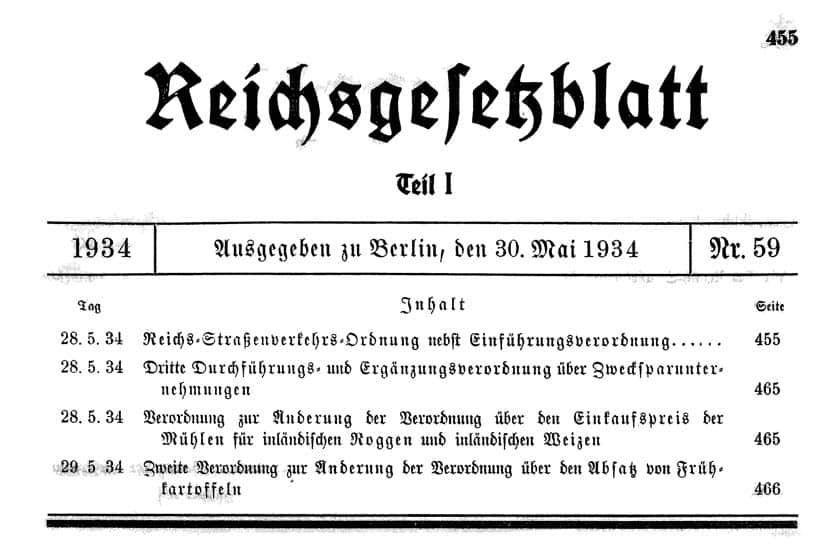
The first road traffic regulations were issued on 28.05.1934.
(Source: https://de.wikipedia.org/wiki/Stra%C3%9Fenverkehrs-Ordnung_(Germany)
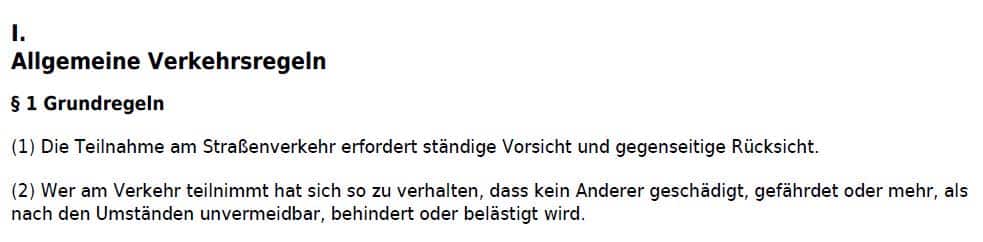
Every road user should be familiar with §25. The wording is almost identical to today’s §1(2).

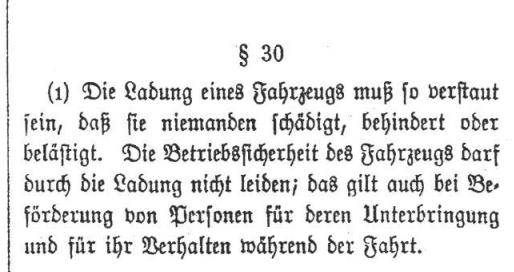
Section 30(1) of the Ordinance is worded in such a way that securing the load is not expressly required, but it is obvious if the purpose of the section is to be fulfilled.
In 1937, the StVO was revised and the regulation for the load is now expressed in §19(1) instead of §30.

16.11.1970, the text was amended as shown opposite and placed in §22(1).
I was unable to find out exactly when §19 was converted to §22. Perhaps one of the readers can help me with this.
However, it was specifically required that the load must be “specially” secured against falling.
§22(1) The load as well as tensioning chains, equipment and other loading devices must be stowed safely and specially secured against falling and avoidable noise.
The currently valid text was published on December 22, 2005.
§22(1) The load, including load securing devices and loading equipment, must be stowed and secured in such a way that they cannot slip, fall over, roll back and forth, fall down or generate avoidable noise, even in the event of emergency braking or sudden evasive action. The recognized rules of technology must be observed.
With this amendment to §22(1) StVO, what the legislator actually wanted was concretized. It said:
The third list is the decisive one, as it refers to rules. In general, these include the VDI-2700ff series of guidelines “Load securing on road vehicles”. Various securing methods are mentioned there and their calculation is described. Of course, EN-12195 and the CTU Code should not be forgotten either. However, the main contents are comparable, e.g. the accelerations have the same values in all regulations.
In this case, the inadequate load securing is checked by experts to determine whether the “recognized rules of technology” have been observed. It is also checked whether the implementation is such that the requirements of §22 StVO have been met. The VDI guidelines expressly permit other methods if they achieve the specified objectives. However, they must be confirmed by an independent organization and provide repeatable results.
A safety device (Hebtscho method) that uses the gut feeling “it will hold, I won’t drive far or nothing has ever happened” does not meet these criteria. Which is why it is not advisable. Unfortunately, this practice is not only common among shippers, but also among drivers, who must in any case have sound training.
That’s why I’m using the following diagram to try to organize the methods according to the principles of positive locking and frictional locking and present them clearly. This is my personal approach and perhaps one or the other will adopt the illustration.
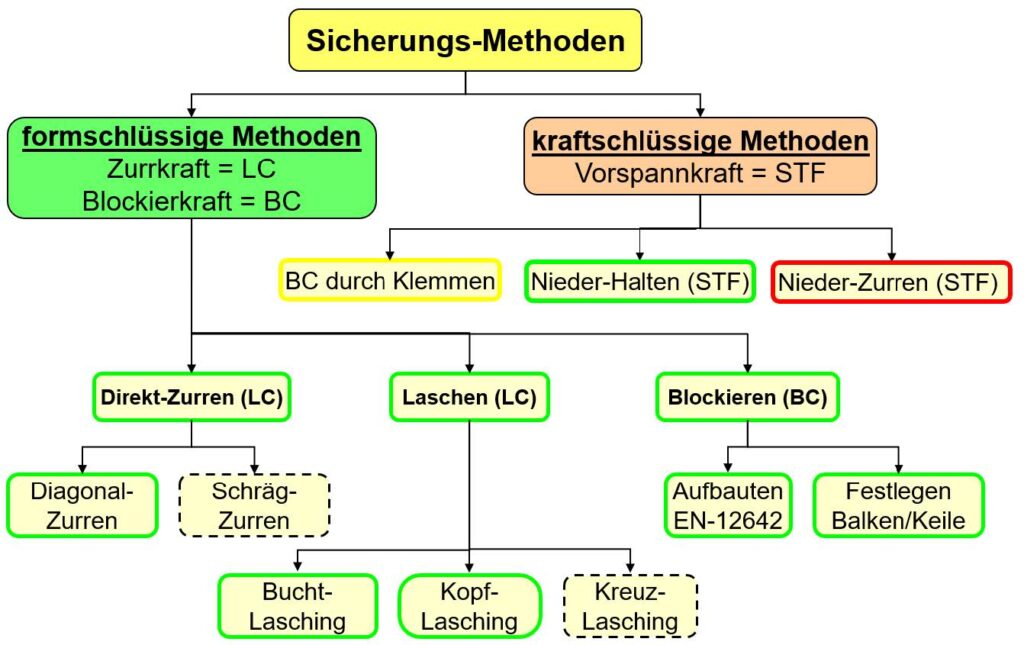
It is easy to see that the diversity of variants clearly lies with the form-fit methods, but in practice the force-fit tie-down lashing method predominates. The group outlined in yellow comprised the clamping boards (correct: intermediate wall lock), clamping bars and clamping beams. The locking mechanism is based on the principle of friction.
Unfortunately, however, in practice you often only see the tie-down method. It is the simplest, but also the one with the most risks.
The use of clamping boards to secure the load to the rear is just as common.
If the clamping boards are also used on a semi-trailer with a technical payload of 27,000 kg, which is often the case, then the blocking force of 400 daN is insufficient to secure the load, even if there are 2-3 boards.
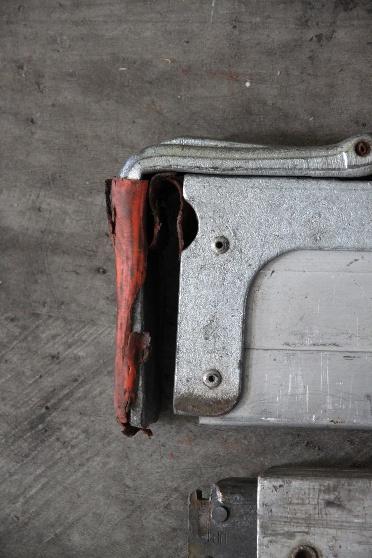
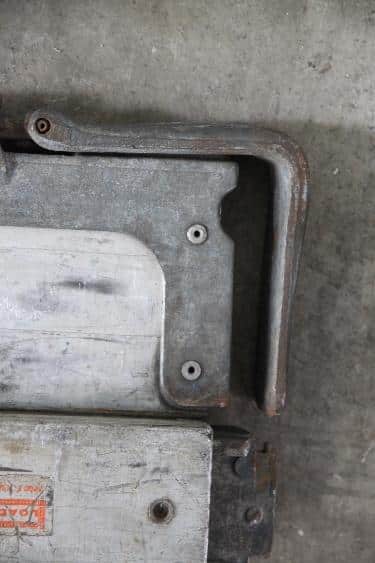
This method is also “better than nothing” to the eye rather than adequately securing the load.
In the next few episodes, I will go into detail about individual methods and explain their advantages and the risks involved in using them.
As always, my explanations are only intended to outline the topic, but not to cover it exhaustively. If you familiarize yourself with the task, you may find solutions that are simple and better. Simply doing nothing increases the general risk during the transportation phase for all involved and this should be avoided at all costs.
Tackle it, it can only get better!
Yours, Sigurd Ehringer

<< Previous article
Episode 66: Securing drums correctly – stable load units
To the next post >>
You are currently viewing a placeholder content from Vimeo. To access the actual content, click the button below. Please note that doing so will share data with third-party providers.
More InformationYou are currently viewing a placeholder content from YouTube. To access the actual content, click the button below. Please note that doing so will share data with third-party providers.
More InformationYou need to load content from reCAPTCHA to submit the form. Please note that doing so will share data with third-party providers.
More InformationYou are currently viewing a placeholder content from Google Maps. To access the actual content, click the button below. Please note that doing so will share data with third-party providers.
More Information